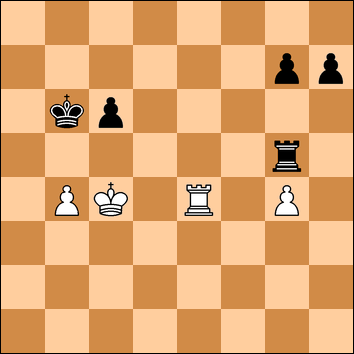
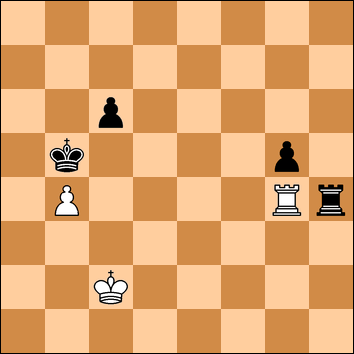
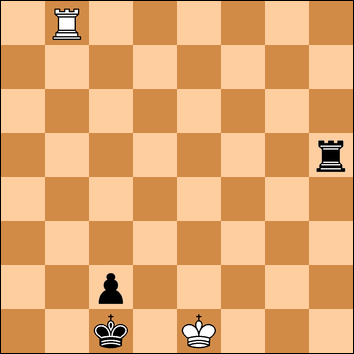
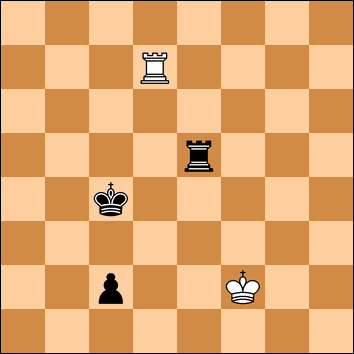
Showing posts with label chess study. Show all posts

Saturday, July 19, 2014

DECOY - ONE OF THE MOST POWERFUL WEAPON IN CHESS

You are absorbing the news from GAZA when suddenly the strike on the MH17 takes your eyes away from it. While you are trying to deal with the new information, GAZA is attacked again. This is the art of decoy used widely in the game of chess, and whoever masters this art wins almost every time. 

However, I cannot actually say that the two are interrelated as I don't really have the evidence to link between them. This post is only to demonstrate what decoy means in chess, and I will use examples from my own games, not from the masters. 

Perhaps the most memorable decoy I employed was against Lim Yeang Khee in 1998 during the Grand Asean Chess Challenge:

Yours Truly - Lim Yeang Khee, GACC III, 1998


The Black King was sitting comfortably in his castle when suddenly 27.Rxh7+ came crashing. It lured the King into the corner where he was eventually taken on a terror ride towards his doom. Once the King has left his guard of f7, I took the liberty to gatecrash the castle starting with 28.Qf7+. The rest was history. 

In recent games also, especially online games because I don't enter many tournament games nowadays, I have successfully deployed the decoy with deadly effects. Take for example a game against dedanikola in 2014:


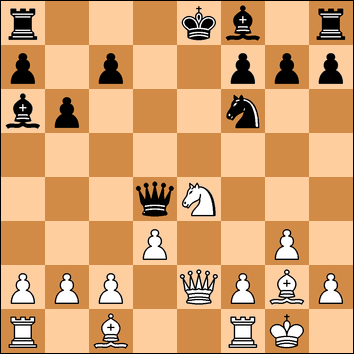
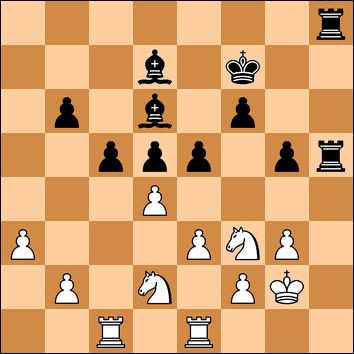
dedanikola - Yours Truly, chess.com, 2014


I was playing black in this sharp position. I could actually take the e5-pawn but chose to take the King for a walk instead with 18... Nxf2!? where the open King position was subject to checks from my Bishops and Rooks. Coupled with his weak defending, I managed to checkmate him 12 moves later. 


Saturday, January 14, 2012


WHAT IS THE BEST PLAN?

I'm sharing with you here an ongoing game against an online opponent in chess.com. We can see that Black just endured a 'wait and see' policy by placing his pieces on the first three rows of his kingdom. How can I (playing White) continue from this diagram?

Friday, November 18, 2011

White to move


QUIZ


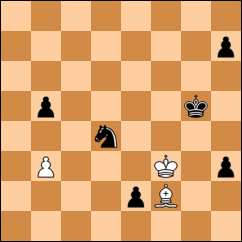
Black's King was being too adventurous and went surprisingly forward after a Knight check at e5. Was it a journey to remember or a point of no return?

Friday, October 21, 2011

QUEEN ENDING

White to move

I like endings. But endings like this will burst our heart, especially if played in time trouble. Queen controls so many squares, but which squares are more important? And then the exchange to pawn endings. Is it advantageous? All this questions must be answered before you make your move.

Friday, July 15, 2011


QUIZ TIME


What is Black's best move from this diagram?

Saturday, June 04, 2011

SECRET PREPARATION?

Actually, I wanted to put 'Does My Chess Life blog destroy Kelantan's chances in MSSM?' as the topic for this post, but after due consideration, I acted against it.

Admittedly, I, pretty much like all Kelantan chess enthusiasts, am feeling a little anxious right now as to how our MSSM team is doing in Penang. However, we are lucky because Gilacatur is there to update the results of the ongoing championship in the MSSM 2011 blog.

Nevertheless, the purpose of this particular post is not to update the result, rather to write whether My Chess Life (MCL) really is destroying the team's chances in MSSM.

As we all know, MCL posts about Kelantan's chess developments and news, and sometimes posts games played by Kelantan players completed with notes and analysis.

I was called to write on this topic because recently, there was a person who badly wanted the Kelantan Closed 2011 bulletin, which I think would be used as a preparation for his team if paired against the Kelantan team.

In my humble opinion, we, as a chess player, must always improve ourselves. We don't need to worry about somebody studying our games because we must always have something in our sleeves so that we will not become too predictable. There really is no question of 'revealing too many secrets' when we are really prepared for the games.

Wednesday, May 25, 2011


The front cover

KELANTAN CLOSED 2011 BULLETIN

Kelantan Closed 2011 Bulletin is here! It contains more than 100 games in its 52 pages, complete with diagrams, starting list and final crosstable. Among the players are Nik Ahmad Farouqi (1914 National rating), Nik Mohd Nazri (1789), Syed Azizi (1788), Mohd Amin (1654), Muhammad Ariez (1605) and Baharuddin Hamzah (1533).

For more information on how to get this bulletin, please log on to PCNK website or for some of the games, please log on to Kelantan Chess Network.


Saturday, April 16, 2011


INFERIORITY COMPLEX (cont.)


From this position, White continues with 21.f4!.


Black's reply 21... exf3 en passant is practically forced so as not to lose a piece without any compensation. 22. Rxe5 fxe5 23.Bxf5+ Kc7


Now, Black has to rely on his passed pawns on e and f files to counter White's extra piece. White, on the other hand, has to find the way to exchange the Rook, or else, he has to play accurately using the combination of his Bishop and Rook (and his King, if needed) to stop the pawns. But first, White has to disrupt Black's pawn formation while at the same time solving his problematic double c-pawns.

24. c4 e4 Black continues his pawn march. Any of 24... d4 or 24... dxc4 will cost him the passed pawns. 25. cxd5 e3


The pawns look menacing, but in actual, it can easily be stopped by the Bishop. All White has to do now was to exchange the Rooks. White continues 26.d6+ Rxd6 27.Rxd6 Kxd6 28.Bg4


The pawns are stopped. 28... f2 29.Be2 Ke5 30.c3 Ke4 31.Kc2


White has to bring his King to visit Black's Queenside pawns. For this, he has to use his a-pawn to help the King. If Black scurries back to defend the pawns, White can switch the plan by attacking the passed pawns instead. 31... h5 32.Kb3 h4 33.Kb4 b6 34.a4 Kd5 35.Kb3 a6 36.Kc2 Ke4 37.Kb3 b5


38.Kb4 bxa4 39.Kxa4 Kf4? Black misses his chance to draw. He should try 39... f1=Q! and the game should draw. For example, 40.Bxf1 Kf3 41.Bxa6 e2 42.Bxe2+ Kxe2 43.Kb4 Kf2 44.Kc5 Kg2 45.Kxc6 Kxh3 46.Kd6 Kxh2 47.c4 Kg3 48.c5 h3 49.c6 h2 50.c7 h1=Q 51.c8=Q 1/2-1/2

40.Ka5 Ke5 41.Kxa6 Kd6 42.Ka5 Kc5 43.Ka4 Kd5 44.Kb4 c5+ 45.Kb5 Kd6 46.Kb6 Kd5 47.Kc7


White has a luxury of time in targeting any of the Black's pawns at c5, h4, e3 and f2. While Black has to constantly guard the squares around them in order to stop White's King. Still, Black's best chance is to queen the f pawn and escorts his e-pawn to force the exchange of White's Bishop. 47... c4


A big mistake. Now White switches his target for the c-pawn. The end is near. 48.Kb6 Kd6 49.Kb5 Kd5 50.Bxc4+ Ke4 51.Be2 1-0

Final position

Saturday, April 09, 2011


INFERIORITY COMPLEX

The above position is a game between me and an online opponent. White's position is a nightmare with inferior pawn positions - two doubled pawns, 4 pawn islands and on top of that, a pawn less than Black. However, Black's last move 20... c6 was a mistake. He failed to see White's dangerous threat. I'll let you work out White's 21st move.

Wednesday, April 06, 2011


WHERE'S DARLING?

I was shocked to learn that the darling of Tumpat was not at the venue today. A miscommunication has led to her being left behind at her school. The only Tumpat player (the other was Alham Zuhri, who already transferred to represent Machang) who represented the state last year cannot do so this time around because of this unexpected mishap. So, hopefully, we will have another (or maybe two) darling this year in the upcoming state selection.

Nevertheless, this year, we have more participants compared to last year. The boys under-18 comprises of 38 players, while the under-15 sees 23 players trying to be the district reps. The boys under-12, meanwhile, has 31 players taking part. On the other hand, the girls under-18 reps can be chosen from 17 players and the girls under-15 category is a battle among 15 players. The girls under-12 playing field hosts 16 players.

Some pictures from the first day:


Drama:
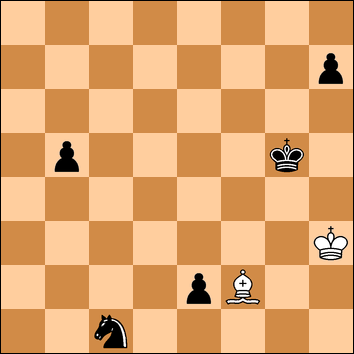
One of my beginner students managed to get this position where she missed the opportunity to checkmate her opponent. Unluckily, she went on to lose the game. This is the position where she (playing White) had the move:


What was the move that she missed?

Friday, March 18, 2011


OPENING, MIDDLEGAME or ENDGAME?

There are three widely accepted phases in a chess game - opening, middlegame and endgame. Which of these should be taught to our students first, especially those beginners? Well, my first coach, Mr. Ismail Ahmad, taught me middlegame tactics first. What I basically did in our training sessions were finding solutions to those never ending supplies of chess problems he gave me. My second coach, on the other hand, taught me the openings. Mr. Rizal Ahmad Kamal showed me some openings I was interested in and revealed the sense behind the moves.

However, I personally coach my students the ending first. This is because they are mostly beginners, thus I believe that they should be able to handle each piece individually before handling all the 16 men. Yes, they will learn not only how to move each piece, but how to move them meaningfully across the board. As the checkmate is the common purpose of this game, moving the King meaningfully to escort the Queen/Rook in checkmating a lone opponent King should be very useful. They will also learn how to use the Queen/Rook to usher the opponent's King to the corner.

For the training on how to handle the Knights, I ask them to use their Knights to banish all the opponents pawns in the most efficient way possible. They can also do this against their fellow friends by being the first to execute all their friend's immovable pawns before theirs.

The pawn war should be the best way for them to learn how to best move their pawns. For the sole target of being the first to land one of their pawns at the promotional squares, they will, in the process, learn how to move, to exchange, and how to make a passed pawn.

And I'm still searching for the best way to coach my students how to handle the Bishops. Any ideas?

Sunday, January 23, 2011

MISSED OPPORTUNITY

I missed a strong continuation today, chose a weak reply and nearly lost the game.


Black to move from the diagram. The game was balanced until Black decided to go on the offensive and obtained a menacing pawn march. But, I failed to see a strong continuation, where White will be in a really deep trouble. Instead, I took the a-pawn with my a8 rook, and the game was drawn a little later.

What did I missed?

Friday, July 30, 2010

COACHING STUDENTS

I like to share some tips for coaching primary (under-12 category) or secondary (under-15 and under-18) school students. There are several fun ways to coach them. Many of these training devices I revise from what I took from this interesting website.

1. Use time odds.
I give them 10 minutes to my 1 minute. There are many times where I lose on time, but mostly, I manage to survive. Nevertheless, some of them really use the given time wisely and think hard in order to beat me (I used their thinking time also for my replies). The merits of this device - using time wisely and handling the clock correctly.

2. Play pawn games.
I set up all the white and black pawns on their original squares, minus all the other pieces. Using a simple rule of those who manage to get a passed pawn first wins, I let them play against each other. The merits - learn to get passed pawns with correct handling of pawn formations.

3. Checkmate me.
I set up basic checkmate materials such as Queen and King vs lonely King, Rook and King vs lonely King etc. and ask them to checkmate me in only one minute. Of course most of them manage to checkmate me using the Queen, but many stumble when using a Rook. The merits - learn checkmate patterns, and most importantly, learn to think fast.

4. Puzzles.
I give them positions containing certain lessons learned earlier, e.g. pin, double check, double attack, en passant, and ask them to solve it. This device should be done in groups, so that they will try to beat the other groups for the solution. The merits - learn the fundamental tactics in chess.

5. Simuls.
All the students play against me simultaneously. Students must keep score of their game, and must not consult anybody throughout. Touch move only applies to the students, not me. During 2008 centralised training with the Gua Musang team, I played against all 36 students from all the age categories, winning all but 1 when I lost to a form 5 student from Sungai Asap. The merits - use all that have been learned in a competitive game.

Sunday, June 06, 2010


KNIGHT ENDGAME STUDY

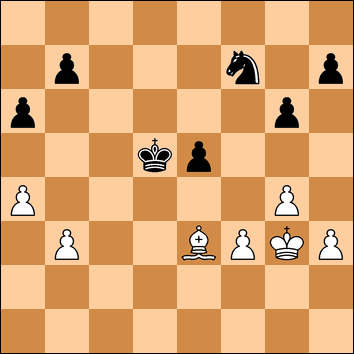
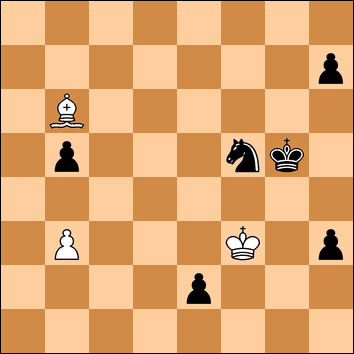
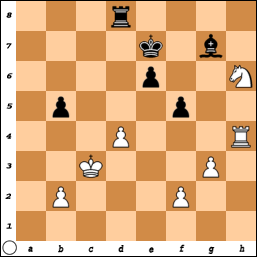
Knight endgame is always fascinating. Those who dances gracefully and purposefully will win the game beautifully. Here is a position I was in last night against an online opponent. I was down a pawn, but I managed to put my King in a commanding position. His last move was 55.Nb6, attacking my d5 pawn. What is the best move for Black?

Tuesday, June 01, 2010


MATE IN ONE

Here is an interesting puzzle I found in a book (I'll tell you later with the solution).

The question:

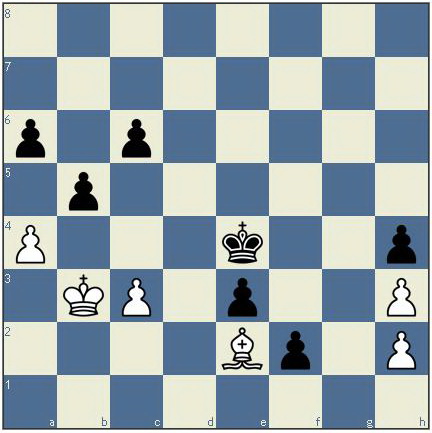
Peter was watching his two brothers playing a game of chess. At one point of the game, Peter sketched out exactly what he saw on the board, and his diagram is shown here. The interesting thing is that it was his eldest brother David's move next (he was playing with the white pieces), and he achieved checkmate that move.

What was David's move?

Thursday, April 22, 2010

CHESS LESSON LINKS

My colleague from MSSD Tumpat asked me to list some links to good chess lessons for him so that he can teach his students better chess. Here are the links which I think would be helpful for him:

Logical Chess
Chess Teacher Lessons
Teaching Your Child Chess
Chess Teaching Manual
Chess Corner


However, the coach must know how to effectively use these materials for the benefits of his charges. Examples should be taken from his/her own games so that the students will feel involved in the lessons.

Happy coaching!

Saturday, April 03, 2010

BLOGGERS AT WAR!

Today I was at SMK Chengal to watch Kota Bharu players battle it out to be the district reps. I bumped into Bad Bishops (BB), who went to cheer for his students. Unfortunately, my camera was not available and I did not take any pictures. The selection was held for two days (3-4 April 2010) and the winners will be announced tomorrow.

In the mean time, BB and I played a game while waiting for the third round to commence. It started as a French (I played Black), and after a series of exchanges, BB was true to his name when he had two Bishops against my two Knights (I was captain of IIUM Knights several years back, before they change the name to IIUM Mustangs nowadays). Consequently, further exchanges leads to an interesting pawn endgame where Black had double f-pawns.

Here is the position; Black to move and end the game:


Answer: 1...f5! 0-1

Monday, March 08, 2010

ARE KNIGHTS REALLY ARE BETTER THAN THE BISHOPS?


This is a recent endgame I played against an online opponent. A thorough assessment on this kind of position is essential if you are to be a good chess player. Pawn structures, king position, minor piece arrangement should be considered very accurately. Knight versus bishop always has been, and will be, debated fiercely as who is better, but really, it is only a matter of who realizes the advantages better.

From the above position, white made a mistake when he played 43.f4? to which black strongly replied 43...e4! creating a passed pawn. The play continued 44.h4 b5, 45.axb5 axb5, 46.h5


White tried to create his own passed pawn by exchanging his pawn majority on the Kingside. 46...gxh5, 47.g5 Nd6! The black knight blockaded the passed pawn. 48.Ba7 Nf5+, 49.Kh3 e3, 50.Kg2 The King scrambled back to stop the intruder. 50...Ke4, 51.Kf1 Kxf4, 52.Ke2 Kxg5, 53.Kf3 h4, 54.Bc5 h3, 55.Bb6 e2!


The pawn marched on, knowing that it cannot be captured because of the threat of 56...h2 queens. 56.Bf2 White tried to stop both pawns with the bishop and the King, but yet the knight delivered a stunning blow 56...Nd4+!


57.Kg3 Nxb3 Creating another passed pawn. 58.Kxh3 Nc1!


This knight heading for d3 to control the queening square e1. Game over. 0 - 1

Here we can see that the knight was powerful enough to jump all over the place creating havoc and defending at the same time, while the bishop was helpless when all the opponent's pawn were on the light squares. The King was tied to defend the queening of the two passed pawns, but the third one proven to be too much.


However, when both bishops are still on board, they pose powerful threats. The next game shows the power of the two bishops against the two knights.


In this diagram, the knights movement were severely restricted by the bishops and the phalanx of pawns. Even after exchanging all the rooks the bishops will still dominate the knights. Nothing fancy about black's attack - it was straight forward towards the King. Enjoy.


Friday, February 05, 2010

BUILDING THE BRIDGE

I managed to build a bridge, again (I did it against another online opponent here). This is a basic rook ending any chess player has to know by heart. It was quite easy to find it, through enough training. So, my young padawans, please don't play truant. Training continues this Sunday and please be ON TIME!

The critical endgame position started with the diagram:


After 46.Re4

Black eliminates one of White pawns by exchanging it with 46...h5! The game continues 47. gxh5 Rxh5 48. Rg4 g5 49. Kc3 Kb5 50. Kb3 Rh3+ 51. Kc2 Rh4


After 51...Rh4


Black kills any hope for White to win the game by exchanging the last pawn. From now on, it is Black who has all the initiative. 52. Rxg5+ Kxb4 53. Rg8 c5 54. Rb8+ Kc4 55. Kd2 Rh2+ 56. Ke3 Kc3 57. Rc8 c4 58. Rc7 Rh3+ 59. Ke2 Rd3 60. Rc8 Rd4 61. Ke3 Rh4 62. Ke2 Kc2 63. Ke3 c3 64. Rg8 Rh3+ 65. Ke2 Rh2+ 66. Ke1 Kc1 67. Rc8 c2 68. Rb8 Rh5


Starting the bridge

Rook on the 4th rank is the starting of 'The Bridge'. White is helpless. 69. Rb7 Re5+ 70. Kf2 Kd2 71. Rd7+ Kc3 72. Rc7+ Kd3 73. Rd7+ Kc4 0-1


The final position


Saturday, January 30, 2010

DISAPPOINTING

My 20km drive to the school ended with a sour note. Nobody turn up for the selection. I was waiting for nearly two hours in vain. Maybe the students mistakenly heard the announcement on Thursday that the co-curricular programme on that particular Saturday was only for the chairmen, vice chairmen and the secretaries of every clubs/uniform bodies, although this should not include the chess selection. Not giving up hope, I will postpone the selection to be held this Monday at 4 p.m. Interested players PLEASE BE THERE.

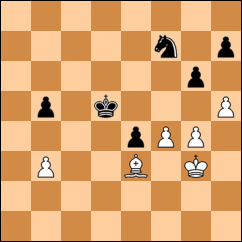
Nevertheless, while waiting, I conjured up an interesting position against my Chess Genius in my cellphone. White (yours truly) looks like he is going to be a piece down, but yet, it is Black (Chess Genius) who should find a draw if he tries to trap the noble White Knight. This is the critical position:


After 35...f5

Highlight below for answers:

36.f3 Rh8, 37.Nxf5+ exf5, 38.Rxh8 Bxh8, 39.Kb4 Bxd4, 40.b3! Kd6, 41.Kxb5 Kd5, 42.Kb4 and Black holds for a draw.

LinkWithin

Related Posts with Thumbnails